|
|
America's Tax Burden to Rise
サーバ: Asura
Game: FFXI
Posts: 34187
By Asura.Kingnobody 2014-05-04 09:04:02
care to point toward some of that proof? Thanks for pointing out to everyone that you have never taken an economic class.
I had my hunches, but this just proves it.
BTW, you are the last person to be qualifying other's credentials when you claim to be an accountant but can't even wrap your head around legal forms of tax evasion. By definition tax evasion is illegal. By even considering that there are, as you put it, "legal forms of tax evasion" is ludicrous.
You really should quit while you are behind, before you dig yourself into a hole too deep to get out of.
Or are you going to say that there are tax shelters out there that prevents anyone from paying taxes (other than government made ones, to spur investment in government projects like municipal bonds)? Or, as Ihina always say, did I buy into the propaganda?
VIP
サーバ: Odin
Game: FFXI
Posts: 9534
By Odin.Jassik 2014-05-04 09:13:15
There are legal forms of tax evasion, it's been demonstrated to you countless times, and the companies that do it readily admit it and tout it as clever accounting.
I took several accounting and economics classes, and I've never seen a single bit of proof of any of the things you constantly claim. Moreover, I've never seen you offer ANY form of understanding besides easily googled tax codes and pokemon...
I'm done with you, kindly *** off.
サーバ: Shiva
Game: FFXI
Posts: 3621
By Shiva.Onorgul 2014-05-04 09:13:45
One, raising the minimum wage doesn't appear to reduce poverty rates. Although I'm intimately familiar with the ways that people find to screw themselves regardless of how much or little they make, I do want to point out that poverty is determined in part as a function of the federal minimum wage, so it's kind of pointless to say that raising it (or lowering it!) will ever meaningfully impact poverty rates.
So then, is it worth risking job losses with a raise in the minimum wage to help a smaller number of people have more money that likely won't use it to rise above poverty anyway? Nah. Just shoot them in the back of the head and bury them in a mass grave. Erect stars of David over top to hammer home the point.
I didn't think I was being subtle with my original point, but who knows.
サーバ: Shiva
Game: FFXI
Posts: 3621
By Shiva.Onorgul 2014-05-04 09:23:26
One, raising the minimum wage doesn't appear to reduce poverty rates. Although I'm intimately familiar with the ways that people find to screw themselves regardless of how much or little they make, I do want to point out that poverty is determined in part as a function of the federal minimum wage, so it's kind of pointless to say that raising it (or lowering it!) will ever meaningfully impact poverty rates. Poverty and minimum wages aren't the same thing, at least they shouldn't be. Raising the minimum wage always has a positive impact on reducing poverty rates, the problems is that it is raised modest amounts about a decade after it should be. You spent a paragraph explaining how one can lie with numbers in terms of productivity reporting and then completely whiffed the point I was making.
Maybe I am being too subtle. Or maybe the word "poverty" is being treated like other ***-words, e.g., "healthy," where no one is prepared to offer a definition and it just gets to mean what you think you want it to mean.
When I say "poverty is tied to federal minimum wage," I'm referring to federal poverty guidelines. Those little bumps you see when the minimum gets raised are eventually flattened out as the guidelines themselves get adjusted. Federal minimum wage largely gets increased to keep apace with inflation, after all, not to provide people with better lives. Even President Obama's $10.10 figure is mostly just inflation because the US dollar has dipped pretty hard in our lifetime.
It's everyone's favorite game: move the goalposts and claim a win. If we really cared about dragging people out of poverty (or, alternatively, making poverty a sufficient minimum for people to live in), we'd either charge all those job-creators pocketing our money to move their ***back on US soil or we'd nationalize some businesses and employ people through government. I'm sure there are other options, mind you, but minimum wage jobs are the service-sector-***jobs that no one really wants to fill. Even pushing a broom around a construction site should pay $9/hour in most markets.
[+]

VIP
サーバ: Odin
Game: FFXI
Posts: 9534
By Odin.Jassik 2014-05-04 09:38:30
One, raising the minimum wage doesn't appear to reduce poverty rates. Although I'm intimately familiar with the ways that people find to screw themselves regardless of how much or little they make, I do want to point out that poverty is determined in part as a function of the federal minimum wage, so it's kind of pointless to say that raising it (or lowering it!) will ever meaningfully impact poverty rates. Poverty and minimum wages aren't the same thing, at least they shouldn't be. Raising the minimum wage always has a positive impact on reducing poverty rates, the problems is that it is raised modest amounts about a decade after it should be. You spent a paragraph explaining how one can lie with numbers in terms of productivity reporting and then completely whiffed the point I was making.
Maybe I am being too subtle. Or maybe the word "poverty" is being treated like other ***-words, e.g., "healthy," where no one is prepared to offer a definition and it just gets to mean what you think you want it to mean.
When I say "poverty is tied to federal minimum wage," I'm referring to federal poverty guidelines. Those little bumps you see when the minimum gets raised are eventually flattened out as the guidelines themselves get adjusted. Federal minimum wage largely gets increased to keep apace with inflation, after all, not to provide people with better lives. Even President Obama's $10.10 figure is mostly just inflation because the US dollar has dipped pretty hard in our lifetime.
It's everyone's favorite game: move the goalposts and claim a win. If we really cared about dragging people out of poverty (or, alternatively, making poverty a sufficient minimum for people to live in), we'd either charge all those job-creators pocketing our money to move their ***back on US soil or we'd nationalize some businesses and employ people through government. I'm sure there are other options, mind you, but minimum wage jobs are the service-sector-***jobs that no one really wants to fill. Even pushing a broom around a construction site should pay $9/hour in most markets.
While the terms might be tied, poverty is independent of minimum wage, it's tied to the cost of living, which doesn't necessarily rise as wages increase.
For instance, if 50% of the cost of housing were tied to labor costs, raising the price of labor 100% would increase the cost of housing by 50%, so the level of poverty decreases. It's a lot more complex than that, but the reason that minimum wage seems to define poverty is because wage increases are always barely enough to matter and already too low when they are enacted.
But, I agree, there is far too much wealth accumulating unjustly in a few pockets and being kept outside of the economy.
By fonewear 2014-05-04 10:15:29
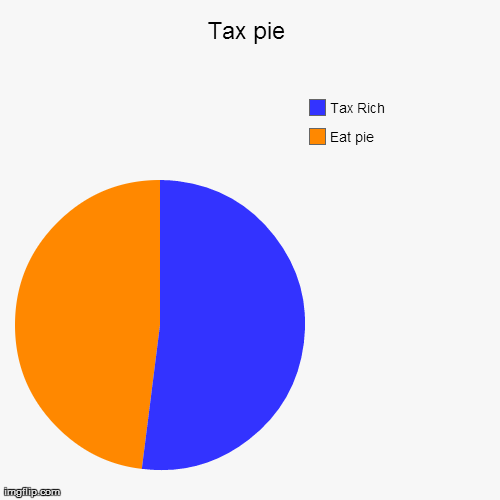
The lack of pie charts leads me to believe no one knows what they are talking about.
By Jetackuu 2014-05-04 10:18:09
One, raising the minimum wage doesn't appear to reduce poverty rates. Although I'm intimately familiar with the ways that people find to screw themselves regardless of how much or little they make, I do want to point out that poverty is determined in part as a function of the federal minimum wage, so it's kind of pointless to say that raising it (or lowering it!) will ever meaningfully impact poverty rates.
So then, is it worth risking job losses with a raise in the minimum wage to help a smaller number of people have more money that likely won't use it to rise above poverty anyway? The thing is: it isn't risking jobs, there's no facts behind that line, it's merely empty threats.
As for California: there's a number of factors but for starters their income came a lot from fuel taxes and tourism, when our first economic trouble hit after Bush took Al Gore's office Gas went up, and did so steadily for years, which hurt everyone but really hurt California as all initiatives to raise taxes were put to a public vote and voted down, after all who would vote to raise their taxes, right? even when it's necessary.
Also as for supply/demand in the workforce; it doesn't really work when people need to put food on their tables and will put up with more ***than they should from shitty employers. Hence why people starting unionizing for collective bargaining. Granted it's gotten out of hand, and I'm no fan, but I see the appeal. If you can remove the "work for a living" from the equation, then I'd say keep everyone out of the industry (short of safety regulations(work+product), obviously) and it will correct itself.
If a company can't afford to pay it's employees a living wage then that company doesn't need to exist.
I'd say more, but after backing the right-wing delusional drivel in here my head is pounding.
By fonewear 2014-05-04 10:19:30
My panties are not bunched and I managed to read the entire thread.
 Bahamut.Kara Bahamut.Kara
サーバ: Bahamut
Game: FFXI
Posts: 3544
By Bahamut.Kara 2014-05-04 10:25:24
i
No, I was making sure you didn't have an elementary understanding of economics.
But I disagree with you in your idea that raising minimum wages has a positive impact at all. There is a weak correlation between the two, but other proven factors play a key role in decreasing poverty. In fact, it also has been proven that raising minimum wage does nothing more than increase the wage that defines the poverty line, and by definition increases poverty, both in the short and long terms. 
By fonewear 2014-05-04 10:26:51
This is the internet citing information has to come from Wikipedia.
Only cite things that come from questionable sources.
By Jetackuu 2014-05-04 10:26:57
If I recall the date right, that 2003~ upward turn of profits of the 1% correlates about the same time as the Bush tax cuts, no?
Talk about wealth redistribution...
[+]

By fonewear 2014-05-04 10:29:37
The lack of petty insults leaves me to believe this thread hasn't reached it's full potential yet.
Is it time to Occupy Wall Street or did we leave because we accomplished nothing ?
By fonewear 2014-05-04 11:54:22
You think that's bad remember the time I was discussing Family Guy with Gary Coleman while wearing a wedding dress in a tax thread.
YouTube Video Placeholder
 Leviathan.Chaosx Leviathan.Chaosx
サーバ: Leviathan
Game: FFXI
Posts: 20284
By Leviathan.Chaosx 2014-05-04 20:35:45
i
No, I was making sure you didn't have an elementary understanding of economics.
But I disagree with you in your idea that raising minimum wages has a positive impact at all. There is a weak correlation between the two, but other proven factors play a key role in decreasing poverty. In fact, it also has been proven that raising minimum wage does nothing more than increase the wage that defines the poverty line, and by definition increases poverty, both in the short and long terms.
Not his source for this claim, however this is the closest thing I could find to support his claims, from the CBO.
Quote: For most families with low-wage workers, a higher minimum
wage boosts family income, because of the increase
in earnings that many of those workers (including those
whose wages were slightly above the new minimum)
receive. A much smaller number of low-wage workers
become jobless and therefore experience a decline in
earnings because of the higher minimum wage.
For families with low-wage workers, the effect of a higher
minimum wage depends on how many such workers are
in a family, whether those workers become jobless (and, if
so, for how long), and whether there are other changes in
family income. For instance, the decline in income from
losing a job can be offset in part by increases in nonlabor
income, such as unemployment compensation, or by
increases in the work of other family members.
For business owners, family income (including income
for shareholders) falls to the extent that firms’ profits are
reduced. In addition, real family income for many people
tends to fall a bit, because the increase in prices of goods
and services reduces families’ purchasing power.
The effects on total national income of an increase in the
minimum wage differ in the long term and in the short
term. In the long term, the key determinant of the
nation’s output and income is the size and quality of the
workforce, the stock of productive capital (such as factories
and computers), and the efficiency with which workers
and capital are used to produce goods and services
(known as total factor productivity). Raising the minimum
wage probably reduces employment, in CBO’s
assessment. In the long term, that reduction in the workforce
lowers the nation’s output and income a little,
which means that the income losses of some people are
slightly larger than the income gains of others. In the
short term, by contrast, the nation’s output and income
can deviate from the amounts that would typically arise
from a given workforce, capital stock, and productivity in
response to changes in the economywide demand for
goods and services. Raising the minimum wage increases
that demand, in CBO’s assessment, because the families
that experience increases in income tend to raise their
consumption more than the families that experience
decreases in income tend to reduce their consumption.
 Leviathan.Andret Leviathan.Andret
サーバ: Leviathan
Game: FFXI
Posts: 1071
By Leviathan.Andret 2014-05-04 21:00:57
The next part said this:
"In either case, the increase in the minimum wage would have two
principal effects on low-wage workers: The large majority
would have higher wages and family income, but a much
smaller group would be jobless and have much lower
family income."
This is pretty much inline with basic economics; that is, you can expect some families getting a better income and some families will be out of work. However, in this case, a raise in minimum wage would have a positive impact on low income families. Still, the government should be expecting to handle the loss of jobs. Usually, the 'normal' method would be support for lowest income families through unemployment benefits, tax cuts, food support in the short run then an increase in government support for skill training, education and job seeking programs.
Government support is critical when raising the minimum wage to combat the negative effects of job loss. The people losing jobs from the raise would be the worst skilled people. Firms are more likely going to fire someone who has the lowest skill rather than someone with better skill even both are working in an unskilled job. A skill training course would , hopefully, bring some of these people back into the workforce - displacing other worse skill workers and have them back into the training ground.
VIP
サーバ: Odin
Game: FFXI
Posts: 9534
By Odin.Jassik 2014-05-04 21:08:45
Quote: Raising the minimum wage increases
that demand, in CBO’s assessment, because the families
that experience increases in income tend to raise their
consumption more than the families that experience
decreases in income tend to reduce their consumption.
Also says this... Basically, the exact opposite of what was supposedly proven.
The people losing jobs from the raise would be the worst skilled people. Firms are more likely going to fire someone who has the lowest skill rather than someone with better skill even both are working in an unskilled job. A skill training course would , hopefully, bring some of these people back into the workforce - displacing other worse skill workers and have them back into the training ground.
They also tend to get rid of people who have other issues, like attendance or a constant pain in the ***.
Leviathan.Chaosx
サーバ: Leviathan
Game: FFXI
Posts: 20284
By Leviathan.Chaosx 2014-05-04 21:11:27
It was the closest report I could find. I personally wouldn't call it proven.
VIP
サーバ: Odin
Game: FFXI
Posts: 9534
By Odin.Jassik 2014-05-04 21:13:35
If I recall the date right, that 2003~ upward turn of profits of the 1% correlates about the same time as the Bush tax cuts, no?
Talk about wealth redistribution...
Pretty sure that is gross income, but there was also a tax holiday around that time when companies were allowed to repatriate their overseas holdings at a relatively low rate.
By Jetackuu 2014-05-04 21:14:44
'tis fine
Leviathan.Chaosx
サーバ: Leviathan
Game: FFXI
Posts: 20284
By Leviathan.Chaosx 2014-05-05 01:15:49
You don't 'buy' propaganda, you only 'invest' in it.
[+]


サーバ: Asura
Game: FFXI
Posts: 34187
By Asura.Kingnobody 2014-05-05 07:10:19
i
No, I was making sure you didn't have an elementary understanding of economics.
But I disagree with you in your idea that raising minimum wages has a positive impact at all. There is a weak correlation between the two, but other proven factors play a key role in decreasing poverty. In fact, it also has been proven that raising minimum wage does nothing more than increase the wage that defines the poverty line, and by definition increases poverty, both in the short and long terms. I'm sorry, but you want me to cite something found in most basic economic texts?
Would you also want me to cite where I say "2+2=4" also?
I hope you are joking...
サーバ: Asura
Game: FFXI
Posts: 34187
By Asura.Kingnobody 2014-05-05 07:15:17
i
No, I was making sure you didn't have an elementary understanding of economics.
But I disagree with you in your idea that raising minimum wages has a positive impact at all. There is a weak correlation between the two, but other proven factors play a key role in decreasing poverty. In fact, it also has been proven that raising minimum wage does nothing more than increase the wage that defines the poverty line, and by definition increases poverty, both in the short and long terms.
Not his source for this claim, however this is the closest thing I could find to support his claims, from the CBO.
Quote: For most families with low-wage workers, a higher minimum
wage boosts family income, because of the increase
in earnings that many of those workers (including those
whose wages were slightly above the new minimum)
receive. A much smaller number of low-wage workers
become jobless and therefore experience a decline in
earnings because of the higher minimum wage.
For families with low-wage workers, the effect of a higher
minimum wage depends on how many such workers are
in a family, whether those workers become jobless (and, if
so, for how long), and whether there are other changes in
family income. For instance, the decline in income from
losing a job can be offset in part by increases in nonlabor
income, such as unemployment compensation, or by
increases in the work of other family members.
For business owners, family income (including income
for shareholders) falls to the extent that firms’ profits are
reduced. In addition, real family income for many people
tends to fall a bit, because the increase in prices of goods
and services reduces families’ purchasing power.
The effects on total national income of an increase in the
minimum wage differ in the long term and in the short
term. In the long term, the key determinant of the
nation’s output and income is the size and quality of the
workforce, the stock of productive capital (such as factories
and computers), and the efficiency with which workers
and capital are used to produce goods and services
(known as total factor productivity). Raising the minimum
wage probably reduces employment, in CBO’s
assessment. In the long term, that reduction in the workforce
lowers the nation’s output and income a little,
which means that the income losses of some people are
slightly larger than the income gains of others. In the
short term, by contrast, the nation’s output and income
can deviate from the amounts that would typically arise
from a given workforce, capital stock, and productivity in
response to changes in the economywide demand for
goods and services. Raising the minimum wage increases
that demand, in CBO’s assessment, because the families
that experience increases in income tend to raise their
consumption more than the families that experience
decreases in income tend to reduce their consumption. I was referring to the fact that real wages do not increase. I know if Jassik and Kara ever opened an economic book before, they would have seen it somewhere towards the middle of the book.
Nominal income rises, but real income stays flat. Our purchasing power goes down, so that bottle of water that costs $1.25 when we were making 7.50/hr goes up to $1.75 when we are making 10/hr. (not exactly, but you get the picture, I hope).
Maybe if people were aware of their surroundings during the last few minimum wage increases, they would have seen the price of common items sharply increase each time minimum wage increases. Ever stopped to ask why that is every time?
 Sylph.Shipp Sylph.Shipp
サーバ: Sylph
Game: FFXI
Posts: 440
By Sylph.Shipp 2014-05-05 07:21:53
i
No, I was making sure you didn't have an elementary understanding of economics.
But I disagree with you in your idea that raising minimum wages has a positive impact at all. There is a weak correlation between the two, but other proven factors play a key role in decreasing poverty. In fact, it also has been proven that raising minimum wage does nothing more than increase the wage that defines the poverty line, and by definition increases poverty, both in the short and long terms.
Not his source for this claim, however this is the closest thing I could find to support his claims, from the CBO.
Quote: For most families with low-wage workers, a higher minimum
wage boosts family income, because of the increase
in earnings that many of those workers (including those
whose wages were slightly above the new minimum)
receive. A much smaller number of low-wage workers
become jobless and therefore experience a decline in
earnings because of the higher minimum wage.
For families with low-wage workers, the effect of a higher
minimum wage depends on how many such workers are
in a family, whether those workers become jobless (and, if
so, for how long), and whether there are other changes in
family income. For instance, the decline in income from
losing a job can be offset in part by increases in nonlabor
income, such as unemployment compensation, or by
increases in the work of other family members.
For business owners, family income (including income
for shareholders) falls to the extent that firms’ profits are
reduced. In addition, real family income for many people
tends to fall a bit, because the increase in prices of goods
and services reduces families’ purchasing power.
The effects on total national income of an increase in the
minimum wage differ in the long term and in the short
term. In the long term, the key determinant of the
nation’s output and income is the size and quality of the
workforce, the stock of productive capital (such as factories
and computers), and the efficiency with which workers
and capital are used to produce goods and services
(known as total factor productivity). Raising the minimum
wage probably reduces employment, in CBO’s
assessment. In the long term, that reduction in the workforce
lowers the nation’s output and income a little,
which means that the income losses of some people are
slightly larger than the income gains of others. In the
short term, by contrast, the nation’s output and income
can deviate from the amounts that would typically arise
from a given workforce, capital stock, and productivity in
response to changes in the economywide demand for
goods and services. Raising the minimum wage increases
that demand, in CBO’s assessment, because the families
that experience increases in income tend to raise their
consumption more than the families that experience
decreases in income tend to reduce their consumption. I was referring to the fact that real wages do not increase. I know if Jassik and Kara ever opened an economic book before, they would have seen it somewhere towards the middle of the book.
Nominal income rises, but real income stays flat. Our purchasing power goes down, so that bottle of water that costs $1.25 when we were making 7.50/hr goes up to $1.75 when we are making 10/hr. (not exactly, but you get the picture, I hope).
Maybe if people were aware of their surroundings during the last few minimum wage increases, they would have seen the price of common items sharply increase each time minimum wage increases. Ever stopped to ask why that is every time? Depends largely on where you live. Sure, if you live in large metropolitan areas this is true. It isn't that drastic in other areas, though. Prices go up, but not as drastically as to negate the extra minimum wage completely. Despite what city dwellers seem to think, there is an entire country that exists outside of their city limits and doesn't function exactly how they are accustomed to.
VIP
サーバ: Odin
Game: FFXI
Posts: 9534
By Odin.Jassik 2014-05-05 07:24:51
no, it's not true, and acting arrogant doesn't make it true either.
[+]

Leviathan.Chaosx
サーバ: Leviathan
Game: FFXI
Posts: 20284
By Leviathan.Chaosx 2014-05-05 07:28:28
Increasing the minimum wage, to me, is counterproductive to any kind of Keynesian method to control inflation. You penalize the consumer by increasing the price of ordinary goods, and let the banks keep their dirt cheap interest rates. Not that I agree with a Keynesian model at all, but if you're going to follow it, do it the right way for a change.
[+]
Sylph.Shipp
サーバ: Sylph
Game: FFXI
Posts: 440
By Sylph.Shipp 2014-05-05 07:33:18
Increasing the minimum wage, to me, is counterproductive to any kind of Keynesian method to control inflation. You penalize the consumer by increasing the price of ordinary goods, and let the banks keep their dirt cheap interest rates. Not that I agree with a Keynesian model at all, but if you're going to follow it, do it the right way for a change. It may be counterproductive overall, I really don't know, for sure. What I do know for sure is it benefits people who don't live in large cities where the price of water, milk, and bread don't get raised astronomically in relation to a minimum wage increase just to stick it to the consumer. Read: it benefits most people in the country since most people are not concentrated in large metro areas like NY, Atlanta, WeHo, etc.
By fonewear 2014-05-05 09:17:50
According to my research using bold wins arguments.
サーバ: Asura
Game: FFXI
Posts: 34187
By Asura.Kingnobody 2014-05-05 09:29:30
According to some people, taking a basic course in a subject matter is not needed to be experts in the field. You can be experts by reading one study that suits your agenda, even if that study has long since been refuted.
[+]
By fonewear 2014-05-05 09:34:40
I read something on Wikipedia once now I'm an expert on taxation.
By fonewear 2014-05-05 09:35:40
You don't 'buy' propaganda, you only 'invest' in it.
Is that why I invested in Facebook ?
[+]

Who like taxes? Not the people who pay them, is always the quick answer. However a new article from CNN had this to say:
Quote: The average American pays more in tax and social security than Canadians, Australians, the Japanese and the British.
But when you compare the American tax burden to other developed nations, the numbers don't look so bad.
New data from the Organisation for Economic Co-operation and Development compared tax rates and social security deductions on average incomes in 34 countries.
The data shows that Belgians, Germans and Danes have the highest tax burdens, while South Koreans, Mexicans and Chileans have the lowest. Americans are about in the middle.
Further investigation into the report released from the OECD had this to say:
Quote: Personal income tax has risen in 25 out of 34 OECD countries over the past three years, as countries reduce the value of tax-free allowances and tax credits and subject higher proportions of earnings to tax, according to new data in the annual Taxing Wages publication.
The increases in tax burdens on labour income in 2013 were largest in Portugal (due to higher statutory rates), the Slovak Republic (due to higher employer social security contributions) and the United States (due to expiry of previous reductions in employee social security contributions).
The average tax burden on employment incomes across the OECD increased by 0.2 of a percentage point in 2013, to 35.9 percent, according to the report. It increased in 21 out of 34 countries, fell in 12, and remained unchanged in one.
The 2013 rise follows a substantial increase in 2011 and a smaller one in 2012. Since 2010, the tax burden has increased in 21 OECD countries and fallen in 9, partially reversing the reductions seen between 2007 and 2010.
The new findings on income tax burdens are among the highlights of Taxing Wages 2014, which provides unique cross-country comparative data on income tax paid by employees as well as the associated social security contributions made by employees and employers; both are key factors when individuals consider their employment options and businesses make hiring decisions.
With the world so intertwined economically today not paying taxes simply isn't a solution. But to be fair America's working class has had it pretty good when compared to other countries in the OECD. The joy ride may soon be over.
Quote: While some might want to complain and even go as far as saying this will hurt the working class, across the board taxes on wages are not only on the rise, they will continue rise as well this year. Seemingly harmful, this will allow business to perhaps again be flexible to hire more labor as the income once again attempts to even disburse itself throughout the masses.
Cheer up, when everyone is taxed we all wind up winner in the end. It’s the fight against taxes that will ultimately harm you.
Is there a solution to the increase in wage taxes for the working class? Or is this the solution we've been waiting for? Can higher taxes on labor once again bring prosperity to America's middle class?
|
|